
From Nigeria to Scotland: The Journey of Chef Tunde Abi
Some chefs discover their cooking style in culinary school.
Others find it somewhere along the road.
For Chef Babatunde “Tunde” Abi Abifarin, that road stretches between Nigeria and Scotland—and increasingly, back across the African continent.
It is a journey that eventually became the foundation for Farin Road.
It starts with Nigeria
Long before professional kitchens, there was Nigerian food.
Jollof.
Pepper.
Stews.
Grilled meats.
Food designed to be shared.
And perhaps most importantly, the understanding that cooking is connected to people.
Those early flavours stayed with Tunde, even when his professional career took him somewhere very different.
Scotland.
Learning the professional kitchen
Over a career spanning around 15 years, Tunde worked across Scottish hospitality, including experience within prestigious hotels and restaurants associated with names including The Balmoral, Waldorf Astoria and Gordon Ramsay.
The kitchens were different from those of his childhood.
Here, cooking came with systems.
Classical techniques.
Sections.
Prep lists.
Consistency.
Presentation.
The pressure of service.
The expectation that the hundredth plate should leave the kitchen with the same care as the first.
Tunde absorbed those lessons.
But as his understanding of European cooking grew, so did his curiosity about African food.
A different question
Eventually, the question became unavoidable:
Why weren't African cuisines being explored with the same curiosity?
Not simply Nigerian food.
Africa.
Morocco's spices.
Ghana's stews.
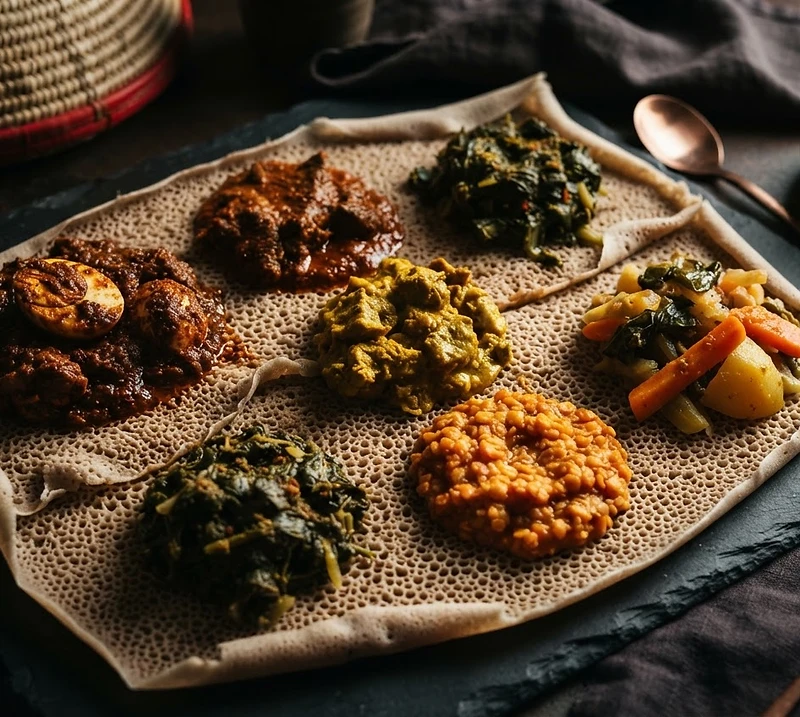
Ethiopia's fermentation.
Rwanda's produce.
South Africa's remarkable mixture of culinary influences.
The deeper he looked, the bigger the subject became.
The chef who had spent years learning European culinary traditions began looking back towards Africa with completely different eyes.
That shift would become Farin Road.
Creating his own space
Farin Road began through pop-ups, supper clubs, events and private dining.
It gave Tunde somewhere to experiment.
Could African flavour work with Scottish produce?
Could traditional dishes evolve while still respecting their origins?
Could a modern restaurant introduce diners to African cuisine without reducing an entire continent to jollof and plantain?
In 2022, Farin Road took an evening residency at Tani Modi in Edinburgh, giving the idea a more permanent stage.
That same year brought another important milestone.
Tunde was named Chef of the Year by Be Inclusive Hospitality, recognition of both his cooking and contribution to the industry.
He later appeared on BBC's Great British Menu, representing Scotland.
For a Nigerian-born chef, there was something particularly meaningful about that.
Nigerian and Scottish
Food conversations often want chefs to choose an identity.
African chef.
Scottish chef.
Nigerian chef.
Modern British chef.
But perhaps Tunde's cooking is most interesting when those definitions overlap.
Nigeria provides memory and heritage.
Scotland provided much of his professional development and the produce surrounding him.
Africa provides an enormous landscape still waiting to be explored.
Farin Road exists somewhere between all three.
The journey continues
Today, Tunde's interest extends beyond simply putting African-inspired dishes on restaurant tables.
It is about how African food is perceived.
How chefs are trained.
How ingredients are understood.
How African culinary traditions can evolve without losing their identity.
And how food can become a bridge between places that initially appear very different.
Nigeria taught him flavour.
Scotland taught him another way of looking at ingredients and kitchens.
Farin Road became the place where those experiences could meet.
The journey isn't finished.
Perhaps that's the point.
Some chefs create a signature dish.
Others spend their careers creating a culinary language.
Chef Tunde Abi is still writing his.


